Skip to content

You already understand the issue if you’ve ever attempted to clean out a garage full of outdated iron rods, a dead inverter battery, or a pile of copper cabling following a makeover. There are many of persons in Bangalore who call themselves trash merchants, but prices vary greatly from street to street, making it difficult to determine who is genuinely weighing honestly and who is subtly deducting grams from your total.
This article explains what Bangalore scrap dealers truly do, how the most common metals are priced, how a legitimate dealer differs from a fly-by-night cart operator, and how to get your scrap picked up without wasting a weekend.
What Do Scrap Dealers in Bangalore Actually Do?
A scrap dealer purchases unwanted materials typically metal, plastic, paper, or e-waste weighs them, makes an immediate cash or bank transfer payment, and then sends the material on for sorting and recycling. This occurs on three levels in a metropolis the size of Bangalore.
The modest roadside stalls and door-to-door kabadiwalas are at the bottom. They deal with tiny amounts of domestic scrap, plastic bottles, and newspapers. Area-level dealers with a suitable shop or yard, a weighing scale, and sufficient volume to purchase iron, steel, and aluminum in bulk are situated in the middle. Organized scrap buying companies, such as metal scrap dealers in Bangalore who work with factories, IT offices, and apartment complexes clearing out outdated infrastructure, are at the top. They operate organized pickup services, provide appropriate receipts, and deal in larger industrial or commercial quantities.
The intermediate rung is what most persons who sell junk from their homes or tiny offices deal with. It’s important to know what to look for before turning over your stuff because that’s also where pricing transparency tends to be the weakest.
Why Do Scrap Prices Change So Often in Bangalore?
Scrap prices are not set locally. They track international commodity markets for the underlying metal, then get adjusted down the chain as material moves from a household seller to a local dealer to a bulk processor to a smelter or mill. Every layer in that chain takes a cut, and the local dealer’s margin depends on how far they are from the nearest bulk buyer and how much competition exists in their area.
That is why the same kilogram of iron scrap can fetch a noticeably different rate in Peenya compared to a residential pocket in Whitefield. Industrial clusters like Peenya, Bommasandra, and parts of the Electronics City corridor have a denser network of dealers competing for volume, which tends to push rates up slightly for sellers who can get their material there.
A few things move prices on any given week:
- Global metal prices. Copper and aluminum are traded internationally, so a price swing in London or Shanghai eventually reaches a Bangalore scrap yard.
- Purity and grade. Clean, sorted copper wire fetches more than wire still attached to insulation or mixed with other metals.
- Volume. Selling 200 kilograms at once usually gets a better per-kilo rate than selling 5 kilograms.
- Season. Demand from construction and manufacturing tends to soften during the monsoon months, which can dip local buying rates slightly.
- GST and compliance costs. India’s GST framework applies an 18 percent rate to most metal scrap, and registered buyers now have to handle reverse charge and TDS obligations on certain transactions. A fully compliant dealer’s operating cost is a little higher than a cash-only informal buyer, and that sometimes shows up in the rate they can offer.
How Do Iron Scrap Buyers in Bangalore Price Their Material?
Iron and steel are the most commonly sold scrap categories in the city, mostly because they come from such a wide range of sources: old almirahs, construction rebar offcuts, broken furniture frames, discarded machine parts, and vehicle bodies.
Iron scrap buyers in Bangalore generally sort material into a few broad grades before quoting a price.
| Iron/Steel Scrap Type | Typical Source | Pricing Notes |
| Heavy melting scrap (HMS) | Structural steel, machine frames, thick plates | Usually the higher-paying iron grade due to low processing needed |
| Light melting scrap | Thin sheets, small brackets, light fittings | Priced lower than HMS because of higher processing loss |
| Cast iron | Old pipes, manhole covers, machine housings | Handled separately since cast iron melts differently from mild steel |
| Rusted or mixed scrap | Long-stored household or outdoor scrap | Rust and contamination reduce usable weight, so rates drop |
Instead of grouping everything together, ask the dealer to weigh the material by grade if you are selling more than a modest quantity. Almost always, mixed-grade weighing benefits the buyer rather than the supplier.
What Do You Need to Know Before Selling to Bangalore Copper Scrap Buyers?
In addition to being the most valued common household scrap metal by weight, copper is also the metal on which individuals are most frequently shortchanged. Here, a few pragmatic considerations really matter.
Bare brilliant copper (clean, uncoated wire), berry copper (slightly oxidised but still generally clean), and copper combined with insulation or other metals like brass fittings are some of the categories that purchasers of copper scrap in Bangalore usually divide copper into. Of the three, bare shiny copper is the most expensive as it doesn’t require any additional processing before being sent to a smelter.
Before you sell copper scrap:
- Strip visible insulation from wiring yourself if you have the time. Even partial stripping usually improves your rate more than the labor is worth to you.
- Separate copper from brass and aluminum. They look similar in small pieces but are priced very differently.
- Ask for the rate per kilogram before the material is weighed, not after. A dealer who avoids quoting a number until after weighing is a signal to be cautious.
- If you are selling copper from an old motor, transformer, or AC unit, be aware that the copper coil is usually only a fraction of the total item weight. Do not expect the whole unit to be priced at copper rates.
How Do You Verify a Scrap Dealer in Bangalore Is Legitimate?
This is the part most guides skip, and it is the one that actually protects you from getting cheated. A few checks take five minutes and save you from a bad transaction.
- Ask if they issue a receipt or invoice. A dealer operating within GST rules will have an HSN code for the scrap category and can issue paperwork, especially for higher-value or bulk sales. This matters more for businesses selling scrap than for a household clearing out a cupboard, but any dealer refusing to discuss it at all is worth a second look.
- Check the weighing scale. A calibrated digital scale showing weight clearly, ideally one you can watch throughout the process, is a basic sign of a transparent operation.
- Look for an actual address or yard, not just a phone number. Dealers who operate from a fixed location tend to be more accountable than someone who only shows up with a truck.
- Ask how they handle segregation. A dealer who sorts ferrous from non-ferrous metal, and separates e-waste from general metal scrap, is more likely to be operating within Karnataka State Pollution Control Board norms for waste handling, which matters if you are a business generating scrap regularly.
- Compare at least two quotes for anything above a small quantity. Even a rough second opinion tells you if the first number was fair or lowball.
Should You Sell Scrap Yourself or Use a Pickup Service?
For small quantities, taking scrap to a local dealer yourself is usually fine. For anything bulky, heavy, or generated regularly, such as office furniture during a move, factory floor scrap, or a full renovation cleanup, a doorstep pickup service saves a genuine amount of time and hassle.
| Situation | Better Option | Why |
| A few kilos of old wiring or utensils | Local dealer visit | Not worth arranging a pickup for small volume |
| Old AC units, appliances, or furniture | Pickup service | Heavy, awkward to transport, often has mixed materials worth grading |
| Office or factory decommissioning | Pickup service with bulk handling | Volume justifies a dedicated team and proper weighing on-site |
| Regular scrap from a workshop or shop | A dealer relationship with scheduled pickups | Consistent volume means consistent, often better, negotiated rates |
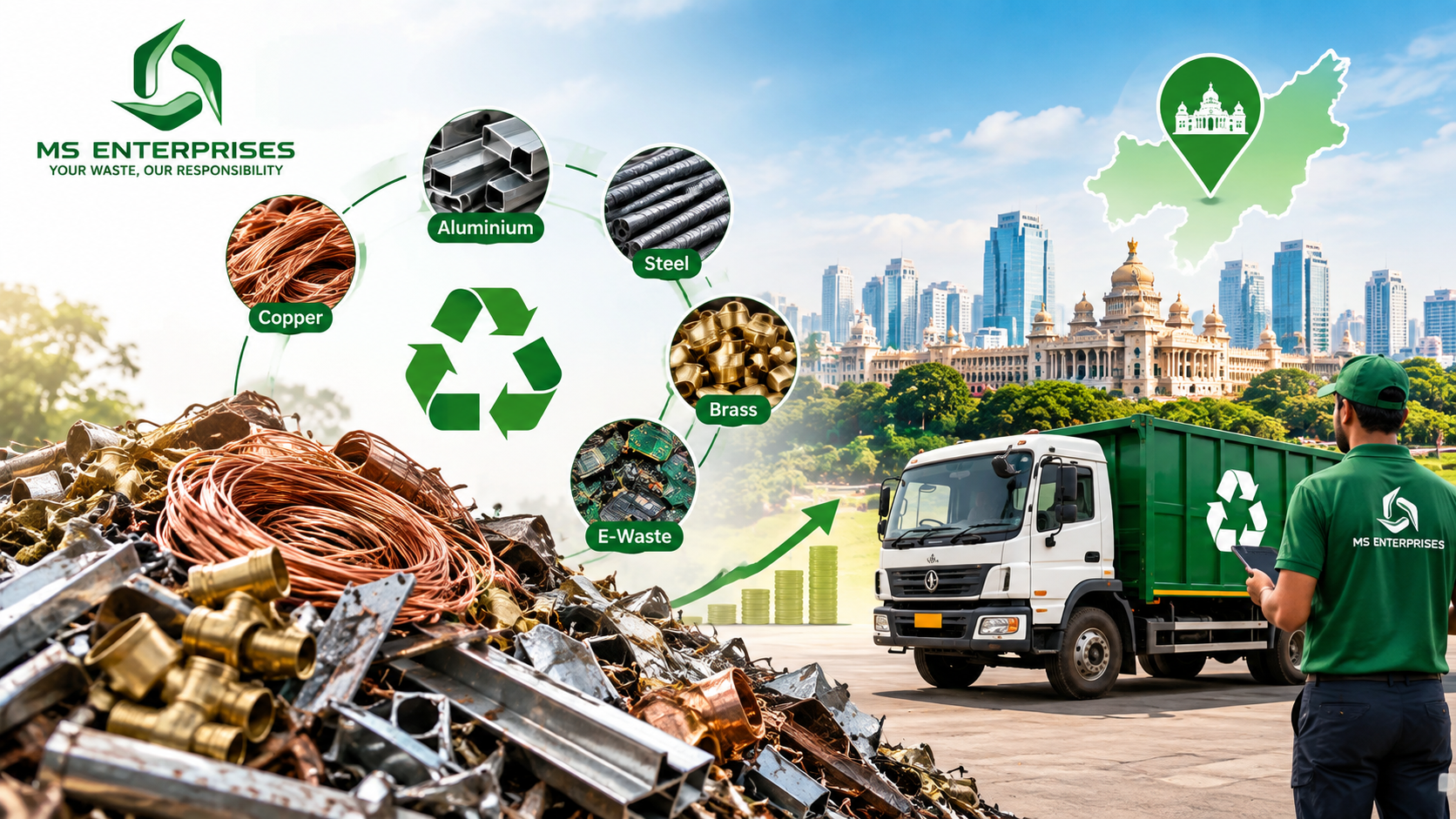
Services like MS Enterprises’ Bangalore scrap buying operation are built around this middle and upper tier of demand, handling everything from ferrous and non-ferrous metal scrap like iron, copper, brass, and aluminum, to electronic scrap and IT equipment, AC units, and full office or building dismantling scrap. If you are clearing out a workplace or handling a large one-time load, a pickup-based contact request is generally simpler than sorting and transporting everything yourself.
What Types of Scrap Are Easiest to Sell in Bangalore?
Not every material is equally in demand. Here is a rough sense of what moves easily versus what takes more effort to place.
- Easy to sell: iron and steel offcuts, copper wiring, aluminum utensils and frames, cardboard and paper in bulk, old batteries, working or semi-working electronics.
- Moderate demand: wooden furniture (only if the wood itself has resale value, not just as scrap), mixed plastic, brass fittings.
- Harder to place: heavily rusted mixed metal, small quantities of specialty alloys, items requiring dismantling before the dealer will even weigh them.
If your scrap falls into the “harder to place” category, expect either a lower rate or a request that you do some basic sorting or dismantling first.
Frequently Asked Questions
What is the current rate for iron scrap in Bangalore?
Rates change frequently based on global steel prices and local demand, generally ranging based on grade, with heavy melting scrap priced above light melting or rusted scrap. Always ask for the day’s rate directly from a dealer rather than relying on an old number, since even a difference of a few weeks can change the quote.
Do scrap dealers in Bangalore pick up from homes?
Many mid-size and larger dealers offer doorstep pickup, particularly for bulk quantities like old appliances, furniture, or a full house or office clearance. Smaller local kabadiwalas may also do pickups for regular customers in their immediate area, but it is not guaranteed, so it is worth confirming before you plan around it.
Is it better to sell copper wire stripped or unstripped?
Stripped, clean copper wire almost always earns a better per-kilogram rate because the buyer does not have to pay for the labor and loss involved in removing insulation. If you have the time, stripping wiring yourself before selling is usually worth the effort for anything beyond a small amount.
Do I need any paperwork to sell household scrap?
For small household quantities, most transactions happen informally with no paperwork needed. For businesses or larger bulk sales, ask the dealer whether they can issue an invoice, since GST rules apply to metal scrap sales and this matters more once volumes and transaction values increase.
How do I know if a scrap dealer is weighing correctly?
Watch the scale directly during weighing, ask for the reading before any deductions, and if you are selling a meaningful quantity, consider carrying a rough independent estimate of weight so you can sanity-check the number you are given.
Can I sell mixed scrap without sorting it first?
Yes, most dealers will take mixed scrap, but they will either sort it themselves and pay a blended lower rate, or ask you to separate materials for a better price. Sorting ferrous from non-ferrous metal yourself before selling is one of the simplest ways to improve what you get paid.
Final Thoughts
In Bangalore, selling scrap doesn’t have to be a guessing game. Dealers that are honest about prices prior to weighing, open about how they assess materials, and prepared to walk you through their procedure rather than hurry you through it are typically the ones who pay fairly. Whether you are managing debris from an office relocation or emptying a single room, spending a few more minutes comparing bids and examining a dealer’s operations may significantly impact the amount that ends up in your pocket.