Skip to content

Waste is produced on every production floor. Steel offcuts, burned-out motors, broken cabling, outdated machine parts, and packaging accumulate more quickly than most plant managers anticipate. Unmanaged scrap takes up floor space, poses a risk to public safety, and silently depletes funds that could be reinvested in the company.
All three issues are simultaneously resolved by effective industrial scrap management. It helps a manufacturer comply with pollution control regulations, keeps the work floor safer, and converts trash into an income stream. This tutorial explains what industrial scrap management truly entails, how metal trash disposal and industrial waste recycling actually operate, and what a firm should seek for in a scrap partner.
What Is Industrial Scrap Management?
The systematic process of gathering, classifying, storing, and recycling the waste materials produced by a factory or other industrial unit is known as industrial scrap management. Metal cuts, outdated equipment, electrical parts, wire, batteries, plastics, and other production residues fall under this category.
Eliminating clutter is not the only objective. An appropriate system keeps track of the trash that is produced, its destination, and the amount of value that may be extracted from it. A cleaner, safer facility and reduced disposal expenses are typically the results of factories that view scrap as an asset rather than an annoyance.
Why Does Every Factory Need a Structured Scrap Management Plan?
Because uncontrolled scrap increases the risks to cost, safety, and compliance over time, a plant needs a defined strategy. A single mound of combined metal and electronic debris near a production line poses a simultaneous risk of fire, trip hazard, and lost wages.
Here is what a structured plan typically protects against:
- Lost revenue. Mixed or poorly stored scrap sells for less than sorted, clean scrap.
- Safety incidents. Sharp metal edges, leaking batteries, and unstable stacks cause injuries.
- Regulatory penalties. Pollution control boards inspect industrial units and fine those that mishandle hazardous waste.
- Wasted space. Scrap that should have been sold weeks ago takes up storage that could be used for production.
- Reputational damage. Clients and auditors increasingly check how vendors handle industrial waste recycling.
What Types of Industrial Scrap Do Factories Generate?
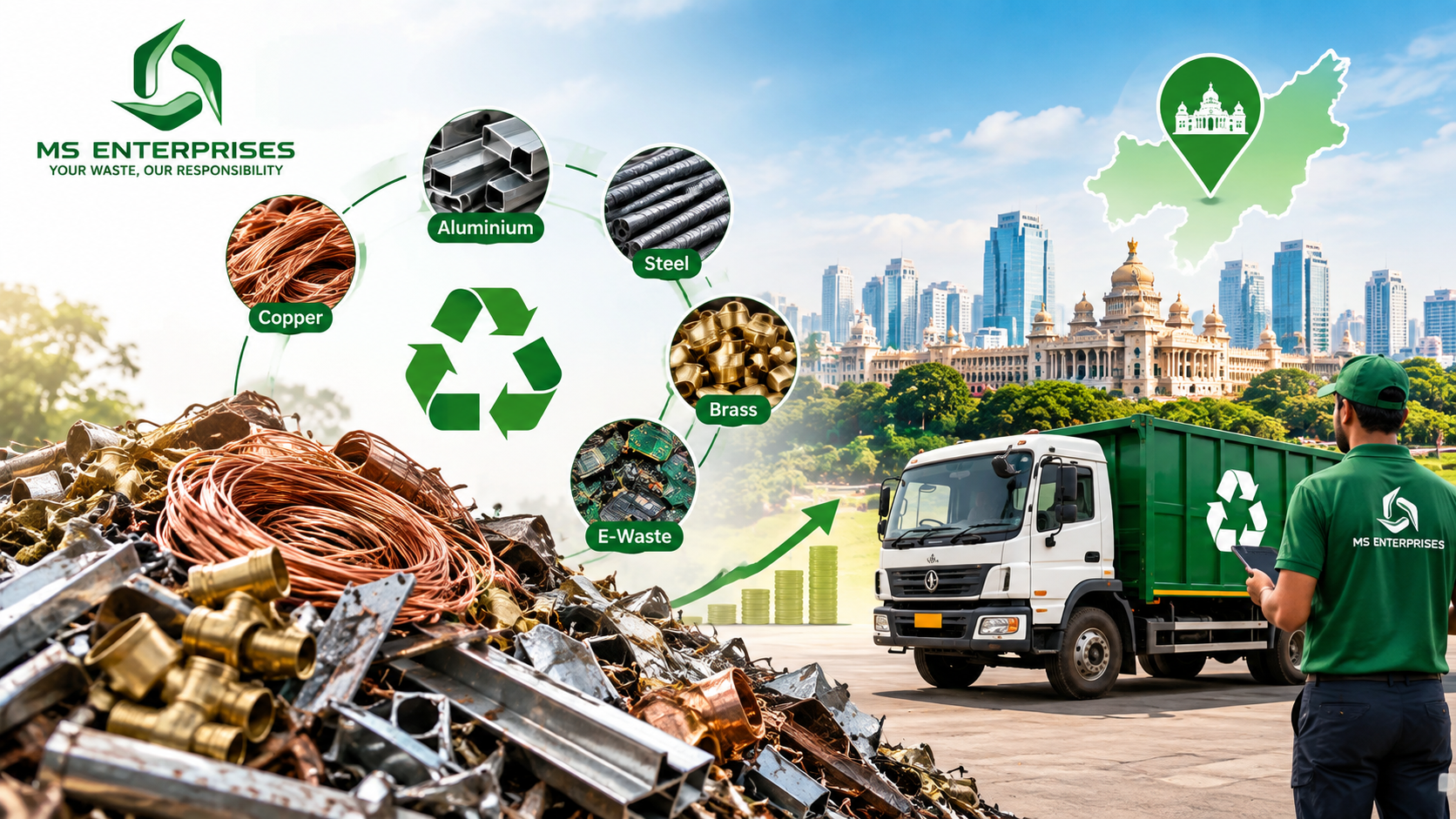
Factories generate a mix of ferrous, non-ferrous, electronic, and general waste, and each type needs a different handling method. Here is a quick breakdown that most industrial units will recognize.
| Scrap Category | Common Examples | Recycling Notes |
| Ferrous metal | Steel sheets, iron rods, machine frames | High recovery value; melted and reused in construction and manufacturing |
| Non-ferrous metal | Copper wiring, aluminum sheets, brass fittings | Fetches premium rates; copper and aluminum are in constant industrial demand |
| Electronic scrap | Circuit boards, control panels, old computers, cables | Needs specialized handling to recover metals safely |
| Battery and UPS scrap | Lead-acid batteries, lithium-ion cells, inverter units | Classified as hazardous; requires compliant disposal |
| Plastic and packaging | Drums, pallets wrap, crates, pipe offcuts | Sorted by polymer type before reprocessing |
| Wooden scrap | Pallets, crates, broken furniture | Repurposed or processed into board material |
A factory dealing with metal-heavy operations will lean on ferrous and non-ferrous scrap recycling channels, while one with older IT infrastructure needs a proper electronic scrap disposal route.
How Does Industrial Waste Recycling Actually Work?
Industrial waste recycling works through four repeatable stages: collection, segregation, processing, and reuse. Once a factory sets these stages up properly, the whole cycle runs with minimal supervision.
- Collection. Waste is gathered from production lines, storage yards, and maintenance areas on a fixed schedule instead of being left to pile up.
- Segregation. Metal, electronic, plastic, and wooden scrap are separated at the source, since mixed loads always sell for less.
- Processing. Sorted scrap is weighed, graded, and prepared for onward sale to recyclers or smelters.
- Reuse or recovery. Recovered metal and materials re-enter the manufacturing supply chain instead of ending up in landfills.
This cycle is exactly what turns a cost center into a small but steady revenue stream, and it is the backbone of any serious industrial scrap management program.
What Does Safe Metal Waste Disposal Actually Involve?
Safe metal waste disposal involves correct sorting by metal grade, protective handling of sharp or heavy pieces, and routing the material to a buyer who follows proper weighing and documentation practices. Metal is usually the highest-value category of factory scrap, so getting this step right matters most.
A few practical points factories often overlook:
- Store ferrous and non-ferrous metals separately, since mixing them lowers the resale grade.
- Keep oily or contaminated metal apart from clean scrap, as contamination affects pricing.
- Use designated bins or cages near machine shops so metal does not end up mixed with general waste.
- Get a transparent weighing process with a receipt for every pickup, so there is a paper trail for accounts and audits.
How Can Manufacturers Enhance Daily Factory Waste Management?
Instead of seeing scrap as an infrequent cleanup task, factories may enhance regular production waste management by incorporating basic practices into daily operations. Over the course of a year, little, regular efforts build up to significant savings.
- To facilitate sorting at the point of generation, colour-code containers for metal, electronics, plastic, and general garbage.
- During onboarding, rather than after the fact, instruct floor employees on which container each kind of scrap belongs in.
- Rather of waiting for storage spaces to fill up, schedule pickups every week or every two weeks.
- For internal monitoring and tax purposes, record each scrap sale together with the buyer’s information, weight, and date.
- Examine scrap volume every month to identify process inefficiencies, since an increase in offcut waste frequently indicates a production problem.
What Advantages Come with Using a Skilled Scrap Buyer?
A manufacturer may obtain fair market price, doorstep pickup, and appropriate paperwork by hiring a professional scrap buyer without having to divert internal employees from production tasks.It also removes the guesswork around current metal prices, which change often.
| Doing It In-House | Working With a Professional Scrap Buyer |
| Staff time spent negotiating with local vendors | Dedicated team handles pickup and pricing |
| Inconsistent or undocumented pricing | Transparent weighing with receipts |
| Ad-hoc pickup, scrap piles up | Scheduled pickups keep the yard clear |
| Limited knowledge of compliant disposal routes | Established recycling channels for hazardous items |
Businesses that outsource this function can see what a buyer actually offers through pages like What We Do, which lays out the full pickup-to-payment process.
What Compliance Rules Apply to Industrial Waste Recycling in India?
Industrial units generating hazardous waste, including certain battery, electronic, and chemical byproducts, must follow the rules laid out by India’s Central Pollution Control Board. State pollution control boards may impose fines or issue closure notices for violating these regulations, which govern the storage, transportation, and transfer of hazardous waste to approved recyclers.
To remain compliant, factories don’t have to become legal specialists. Working with junk buyers and recyclers who are already familiar with these regulations and can direct proper handling of things like batteries, UPS units, and circuit boards is the sensible course of action. For the precise categories and responsibilities that apply to industrial generators, you may examine the formal regulations directly on the hazardous waste page of the Central Pollution Control Board.
What Industrial Scrap Management Errors Should Factories Avoid?
Treating scrap as an afterthought rather than a controlled process is the most frequent error. The majority of downstream issues that industries encounter are caused by this one practice.
- Allowing scrap to build up for months before contacting a buyer, which reduces resale value and raises the danger of a fire.
- Combining general and hazardous garbage, which can make a whole load non-compliant or unsellable.
- Ignoring appropriate weighing checks, which might result in underpayment or disputes.
- Ignoring battery and electronic scrap, which has actual recycling value but is frequently left unnoticed in storage facilities.
- Selecting the least expensive buyer without examining their procedure, which occasionally results in scrap being disposed of rather than recycled.
How Do You Pick the Best Metal Waste Disposal Partner?
Examining a partner’s price transparency, pickup dependability, and adherence to the correct recycling procedures for hazardous categories is crucial to selecting the best one. A short checklist aids in quickly reducing the number of alternatives.
- Do they offer doorstep pickup on a fixed schedule?
- Do they provide a weighing receipt for every transaction?
- Do they handle the full range of scrap your factory generates, including electronic and battery waste?
- Do they have verifiable client reviews or case history in industrial scrap management?
- Are they transparent about where the material goes after collection?
Factories in Hyderabad evaluating local options can see how an established operator answers these questions on the About Us page, or check location-specific service details on the page.
Frequently Asked Questions
What is the difference between industrial scrap management and regular waste disposal?
Industrial scrap management focuses on sorting, valuing, and recycling materials that still have resale worth, such as metal and electronics, while regular waste disposal deals with items that have no recovery value and are simply discarded.
Which type of industrial scrap has the highest resale value?
Non-ferrous metals like copper and brass generally fetch the highest per-kilogram rates, followed by aluminum and clean ferrous steel.
How often should a factory schedule scrap pickups?
Most mid-sized factories benefit from weekly or biweekly pickups. Facilities generating high volumes of metal offcuts may need more frequent collection to avoid storage buildup.
Is electronic scrap considered hazardous waste?
Certain components in electronic scrap, such as circuit boards and batteries, fall under hazardous waste categories and require handling by authorized recyclers rather than general waste collectors.
Can a factory earn money from its scrap instead of paying for disposal?
Yes. Metal, electronic, and even wooden scrap usually have resale value. A good scrap buyer pays for pickup rather than charging for it, which is one of the main financial benefits of proper industrial scrap management.
Do small factories need formal scrap management, or is it only for large plants?
Any factory generating regular waste benefits from a basic system. Even a small unit gains from segregated bins and scheduled pickups, since disorganized scrap causes the same safety and cost issues regardless of factory size.
Bringing It All Together
Managing industrial scrap is a continuous process. It is a continuous system of scheduling, selling, and sorting that promotes compliance, safeguards safety, and converts manufacturing waste into consistent profits. The quickest route ahead is working with a buyer who manages pickup, weighing, and compliance recycling in a single operation, regardless of the priority—disposing of metal trash, getting rid of outdated electronics, or just tightening up factory waste management procedures.
Factories ready to set up a reliable pickup schedule can request a pickup directly, or get in touch to discuss a recurring scrap management plan.